





Current language: English
Models of Collaboration
Support for growth strategies, transformations or M&A processes.
Our freelance experts have in-depth specialist knowledge in their field.
We provide you with experienced interim managers who take on responsibility.
Customized expert teams for complex projects
We find the best experts for these companies
Private equity
Efficient support throughout the deal cycle
Corporates
Technical and management experts for operational excellence
Scale-ups
Strategic & operational support for growth
Task Profile

What Quality Management Consulting Delivers — and What It Cannot

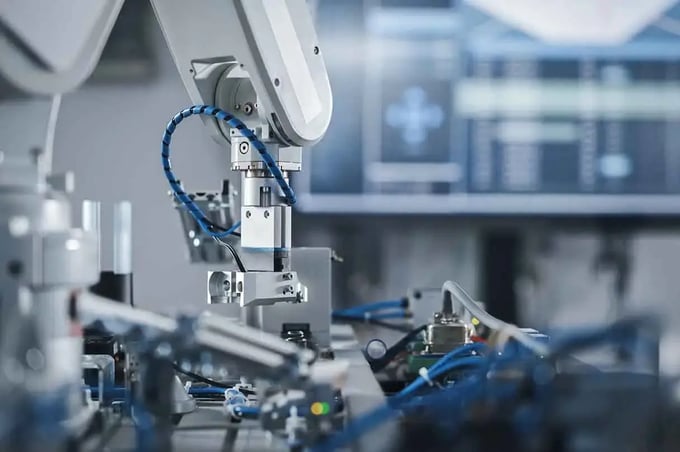
Matching an inspection plan against a production step as the basis of a quality control loop

Quality management is the discipline of making the grade of a result predictable instead of sorting it out at the end. It covers the management system (policy, responsibilities, document control), quality planning before a launch, quality assurance in running operations, and the evidence trail towards customers, authorities and certification bodies. QM consulting in this field starts at three points that are regularly confused in practice.

It separates the place of origin from the place of detection. Where a deviation is found says nothing about where it arose. A final inspection that finds a lot is not a sign of quality capability; it is evidence that something further upstream is not under control. The first piece of work is therefore to trace findings back to the step in which they arise — to a specification, a release, a set-up operation, a training gap.

It separates inspecting from controlling. Sorting out does not create quality; it only keeps the lack of it from leaving the plant. A capable process delivers the required characteristic without an inspection having to produce it afterwards. The route there runs through process capability, set-up and parameter reliability, operator self-inspection, statistical process control and error prevention in design — not through an additional inspection step.

It separates documented from effective. A corrective action is only finished when the same deviation does not come back. In many systems the handling ends with an entry and a signature; the effectiveness check is missing, and the finding returns in the next series. A certificate proves that a system has been described — not that a process is under control.

The same work runs internationally under quality management consulting, quality assurance consulting, QMS implementation or operational quality; a search for a quality management consultant, a quality manager or a quality engineer almost always aims at exactly this service. On the standards side, ISO 9001:2015, IATF 16949 and VDA 6.3 in automotive, ISO 13485 in medical technology, EN 9100 in aerospace and HACCP or IFS in food manufacturing are the reference points against which a quality management system is measured.

What it does not do. It does not issue certificates — an accredited certification body does that, and the separation of consulting and certification is mandatory there. It carries no product liability and does not replace a release decision: whoever blocks a batch, releases a tool or approves a supplier stays inside the company. And it cannot push a requirement through against design — where a tolerance is technically intended, it does not turn into a deviation because manufacturing finds it hard to hold.

This is where the scope of this page ends. How workflows, interfaces and roles are cut is covered by process consulting. Questions about output, delivery reliability and equipment availability sit with operations and process improvement. Legal standards, due diligence and reporting duties are covered by compliance consulting, the technical design of equipment and components by industrial engineering consulting.

Warning Signs

When External Support in Quality Management Pays Off

External support is not the normal case in quality management. Where the cause is named, the standard is familiar and there is capacity for the root cause work, an in-house team gets further faster. In the six situations below, however, exactly one of those three points is regularly missing — and then everything depends on whether anyone can measure the distance between origin and detection at all.

1. Complaints Are Rising Without a Named Cause

  • The defect patterns repeat, but the handling ends at sorting, rework and a credit note.
  • 8D reports are written and closed without anyone checking effectiveness.
  • What is missing is the trace back to the step of origin — not more inspection at the end.

2. A Certification Is Due or Is Wobbling

  • Initial certification to ISO 9001, a customer audit to IATF 16949 or a change of standard after entering a new market segment.
  • Nonconformities from the surveillance audit are still open, and the deadline is running.
  • The work sits in the chain of evidence, not in the manual: who proves what, with what, by when?

3. A Series Launch Threatens to Miss Its Quality Targets

  • Sampling, first article approval and process release collide with the delivery date.
  • Gauges, inspection plan and capability studies are not finished in time.
  • Decisions taken before the launch can only be corrected expensively afterwards.

4. A Supplier Is Not Delivering the Agreed Grade

  • Incoming inspection findings rise, but the supplier rating does not show it.
  • Initial sampling, audit program and escalation levels are missing or never pulled.
  • Supplier quality needs market knowledge and audit experience, not just a letter.

5. Quality Management Should Work Preventively and Never Gets There

  • The department is fully booked with quarantine holds, rework, customer queries and audit preparation.
  • Capability studies, risk analyses and supplier development stay untouched.
  • External capacity takes over either the root cause work or the daily business — both at once does not work.

6. A Quality Function Is Vacant

  • The quality manager is gone, a deputy is named but has no mandate.
  • Responsibility for release, blocking and escalation is unclear as soon as it gets tight.
  • An interim stand-in keeps the company able to produce evidence until the position is filled.

Does one of these warning signs look familiar? A short exchange is enough for a first assessment: where your findings arise, which control loop is missing at that point — and whether outside support is worth it there.

Control Loops

The Control Loops of Quality Management: From Requirement to Effectiveness

A quality management system is not made of documents but of control loops: each one picks up a requirement, measures a result, holds both against each other and intervenes. The six control loops below can be staffed one at a time or together. The usual entry is through one of them, with the neighbouring ones following — because running a control loop without the one upstream of it means measuring symptoms only.

Quality Management System and Evidence Trail

Building and slimming down a management system to ISO 9001:2015: a process map with quality reference, document control, responsibility for release and blocking, internal audits, management review. The aim is a system that is used in daily work and holds up in the audit — not a manual that does neither.

Quality Planning Before the Launch

Preventive work before decisions get expensive: clarifying requirements with customer and design, FMEA on product and process, inspection planning, gauge capability, initial sampling and process release. In automotive this follows the APQP framework and PPAP sampling, in medical technology design control.

Process Capability and Quality Assurance in Operations

Control instead of inspection: capability studies on the critical characteristics, statistical process control, operator self-inspection, set-up and parameter reliability, error prevention at the machine. Where an inspection step is to be dropped, it must be proven beforehand that the process no longer needs it.

Complaint Handling and Root Cause Work

The control loop most systems fail at: recording the finding, immediate containment, root cause analysis down to the technical and the systemic cause, corrective action, effectiveness check and transfer to comparable parts. Methodically through 8D, Ishikawa and five whys — but what decides it is the effectiveness stage, the CAPA step that regulated industries require in writing.

Supplier Quality and Audit Program

What arrives at goods receipt was decided at the supplier long before. The work therefore goes into release and sampling procedures, one quality metric per supplier, an audit program with staged escalation — VDA 6.3 process audits in automotive — and into development where there is no substitute. Where a second source is missing, development takes the place of a switch.

Quality Metrics and Cost of Poor Quality

Figures that quality, production and controlling can agree on: defect rate per step of origin instead of per place of detection, rework and scrap valued, external failure cost from credit notes and recalls, inspection effort as a separate figure. Only this split shows whether inspecting or controlling is the cheaper answer.

Where your weakest control loop sits usually becomes clear in a short exchange — and with it, whether you need outside help at that point or not.

Forms of Involvement

How External Quality Capacity Is Brought In

Beyond the technical fit, what counts in quality management is the burden of proof. A dropped inspection step or a supplier release has to hold up in front of the customer, in front of the auditor and in a liability case. The four common forms of involvement therefore differ not in expertise but in how much decision-making authority the external role is given.

Outside View

Second Opinion on a Defect Pattern

One specialist with a tightly framed brief: tracing a recurring finding back to its step of origin, judging an inspection plan, or a counter-check on whether a corrective action was effective. The result is an assessment with reasons, not an implementation.

Added Capacity

External Capacity in the Quality Team

Two to four external specialists sit with your quality department; technical leadership stays in-house. The normal case for launch support, audit waves and a backlog of evidence work — in other words, whenever daily business eats the preventive work.

System Accountability

Quality Leadership on an Interim Basis

One external person runs the quality function and is genuinely allowed to decide on release, blocking and escalation. It fits a vacant position, special situations, and places where a blocking decision comes easier when it does not come from the own line organisation.

Audit Preparation

Support Through to the Evidence

A small unit works towards a date: open nonconformities, missing evidence, audit program and management review. Kept separate from the certification itself, which an accredited body always performs.

Standards Landscapes

Standards Landscapes: What Decides Quality in Each Industry

Quality management cannot be built industry-neutral, because the standard is the industry. It sets what counts as evidence, who may inspect, how long records have to be kept and what a customer can demand without negotiation. In automotive a customer audit sets the pace, in medical technology an authority, in food manufacturing a retail chain. The same deviation therefore has a different consequence per industry: once a credit note, once a reporting duty, once the loss of the right to supply. We staff by standards experience, not by method knowledge — whoever has run IATF audits knows the burden of proof an ISO 9001 auditor does not put that way.


Quality requirements in the automotive and supplier standards landscape

Automotive & Suppliers

Quality requirements in the medical technology and pharma standards landscape

Medical Technology & Pharma

Quality requirements in the aerospace standards landscape

Aerospace

Quality requirements in the food manufacturing standards landscape

Food Manufacturing

Quality requirements in the machinery and plant engineering standards landscape

Machinery & Plant Engineering

Quality requirements in the electronics and semiconductor standards landscape

Electronics & Semiconductors

Quality requirements in the automotive and supplier standards landscape

Automotive & Suppliers

Quality requirements in the medical technology and pharma standards landscape

Medical Technology & Pharma

Quality requirements in the aerospace standards landscape

Aerospace

Quality requirements in the food manufacturing standards landscape

Food Manufacturing

Quality requirements in the machinery and plant engineering standards landscape

Machinery & Plant Engineering

Quality requirements in the electronics and semiconductor standards landscape

Electronics & Semiconductors

Assignment Types

Assignment Types That Bring Companies Into Quality Management

The assignments actually placed in quality management spread across a manageable number of situations. Each one comes with a recognisable starting point, a sequence that has proven itself in practice, and one figure that shows at the end whether the distance between origin and detection really got shorter.

Eliminate a Defect Pattern and Prevent Its Return

Starting point: a finding repeats, containment is running, a cause is not proven. The sequence that carries: sort findings by step of origin, narrow down the critical characteristics, name the cause technically and in the system, implement the action, check effectiveness across several lots and transfer it to comparable parts. The target figure is the recurrence rate, not the number of closed reports.

Build a Management System or Raise It to a Standard

Starting point: a certification is due, or a customer demands a standard the system does not cover today. First the chain of evidence is determined — which requirement is proven with what — then processes, responsibilities and records are aligned to it, internal audits are introduced and the management review is set up. The target figure is a certification audit without a major nonconformity.

Get Supplier Quality Under Control

Starting point: findings at goods receipt and complaints on bought-in parts rise without the supplier rating reflecting it. First the supplier base is sorted by what a failure of each one would pull along. Then follow binding routes for release and sampling, one quality metric per supplier, an audit program with staged escalation, and development work on the parts for which there is no second source. It is measured by the share of released suppliers with proven capability.

Secure the Quality of a Series Launch

Starting point: a launch has a date, inspection planning and capability evidence lag behind development. First special characteristics and risks are fixed, then gauges, inspection plan and capability studies are aligned to them, initial sampling and process release are prepared and the handover to series quality is planned. The target figure is a launch without a concession.

Quality Roles

Quality Management Consultant Roles Companies Ask For

The burden of proof decides which profile fits: whoever finds a cause on an assembly does not necessarily build a management system, and a supplier audit abroad asks for yet another kind of experience. The six roles below show only a part of the range; the full lists with further profiles from operations, industrial engineering and restructuring sit on the respective category pages.

How a Deviation Moves From Report to Effective Correction

How long a step takes depends on part complexity, standard and data situation. Its place in the chain does not: containment comes before tracing back, the corrective action before the proof. What gets left out in practice is almost always the proof at the end — and exactly there it is decided whether the same finding shows up again in the next series.

Blocking and containing an affected batch after a quality finding

1. Secure the Finding and Protect the Customer

Describe the deviation unambiguously: characteristic, limit, place found, affected quantity and batch.
Immediate containment without knowing the cause: block, sort, inform — with a clear limit on how long it applies.
The result is a finding nobody argues about any more, and a known scope of affected parts.
Tracing a defect characteristic across batch and machine data

2. Trace Back to the Step of Origin

Traceability across batch, machine, shift and set-up operation down to the step in which the characteristic arises.
Separating the technical cause from the system cause: why did it arise, and why was it not noticed earlier?
Hypotheses that were set aside are named, together with the reason.
Fixing process parameters to bring a critical characteristic under control

3. Set Control Instead of Inspection

Action at the place of origin: parameter, fixture, release criterion, work instruction or specification.
Capability evidence on the critical characteristic before an inspection step may be dropped.
Where a control stays in place, there is a reason for how long and what its removal is tied to.
Reviewing several production lots to prove an effective corrective action

4. Prove Effectiveness Across Several Lots

Measurement runs against the baseline fixed at the start — scrap, rework and external findings each separately.
Follow-up across several production lots and shifts — one batch without a finding is not proof.
The action is only closed with proven effectiveness, not with a signature.
Transferring a corrective action to comparable components and plants

5. Transfer to Comparable Parts and Processes

Search for the same pattern of origin in other parts, plants and supplier processes.
Adjust inspection plans, risk analyses and work instructions so the finding does not arise again elsewhere.
Suppliers are brought in where the characteristic arises at their end.
Audit-ready filing of the evidence chain for a closed corrective action

6. File the Evidence Audit-Ready and Hand Over

File records so that an external auditor finds the chain from requirement to evidence without an explanation.
Metric and responsibility move into the line; the handover point is agreed at the outset.
From then on your quality management runs the control loop on its own.
Cost Picture

What a Quality Mandate Costs — Daily Rates and Cost Picture

We invoice quality mandates through a daily rate; there is no project lump sum. Five factors set it: seniority including audit experience; the required standard and the industry — regulated fields such as medical technology, aerospace and automotive sit above the middle; the share of presence in the plant; the length of the assignment; and whether the role decides or only assesses.

In the quality-related fields our current bench moves in a band of €550 to €1,600 per day. The cards below show that per role; their values come straight from the role pages and are not typed in by hand.

Every role states its range on its own page — openly and without an enquiry.

How a budget comes together. It is calculated in person-days, not as a total sum. Root cause work on one narrowed defect pattern usually takes a few days; launch assurance or audit preparation sits clearly above that, and with interim system accountability the effort follows from the days of presence per week. Exactly that presence moves the bill more than the rate itself: records and metrics can be judged remotely, a fixture, a running process and a supplier audit cannot.

The telling figure is therefore not the rate but its relation to the cost of poor quality already booked. Where scrap, rework, special inspections and credit notes run continuously, the root cause work has often paid for itself as soon as one recurring defect pattern disappears for good. Where it is about a certification, no saving stands against the effort but the right to supply — that case is calculated differently and should be argued differently too.

What separates us from a consulting firm. With us you pay the person who does the work — without the layers above: no engagement manager, no partner share, no utilisation base. In return you do not get a body of methods but one person who traces a defect pattern back and produces the evidence for it.

Which profile fits hangs on the burden of proof: a certification project asks for different experience than a root cause analysis in the running series. The full overviews sit under Operations & Production, Industrial Engineering & Plant Engineering and Restructuring & Operational Efficiency.

Findings Trend

More Is Being Uncovered — and the Evidence Moves Upstream

4,670

alerts on dangerous non-food products were recorded by the EU rapid alert system Safety Gate in 2025 — 13 % more than the year before and the highest level since it started in 2003.
European Commission, Safety Gate Report 2025

1.78 million

vehicles were recalled in Germany in 2025 after checks by the Federal Motor Transport Authority — 37 % fewer than in 2024, but still at a high level.
Federal Motor Transport Authority, Market Surveillance Report 2025

1.47 million

valid ISO 9001 certificates were counted worldwide by ISO for 2024, spread across around 2.3 million sites — the standard is widespread, the process control behind it is not everywhere the same.
ISO Survey 2024
From Practice

Asked in Practice: Quality Management and Quality Assurance

It helps companies make the grade of their products and processes predictable instead of sorting it out at the end: building and slimming down the management system, quality planning before a launch, process capability and quality assurance in operations, complaint handling and root cause work, supplier quality, and the evidence trail towards customers and certification bodies. The core of the work is to shorten the distance between the place where a deviation arises and the place where it is noticed.
Quality management is the leading level: it sets which requirements apply, who decides, how deviations are handled and what compliance is proven with. Quality assurance is the part of it that makes sure, in running operations, that the required characteristic actually arises and is documented — inspection planning, gauges, process control, releases. Short version: management sets the control loop, assurance runs it. Whoever only strengthens assurance inspects more; whoever strengthens management inspects less at some point.
It is invoiced through a daily rate. For the quality-related fields the stated band currently runs from €550 to €1,600 per day. Where a role sits inside it follows from seniority and audit experience, the required standard, the industry, the share of presence in the plant, the length of the assignment and the scope of decision-making. Every single role names its range on its own page, without you having to ask for it.
Five points set it. First seniority and audit experience. Second the standard and with it the industry: in medical technology, aerospace and automotive the depth of evidence is greater, so the rates sit higher. Third presence in the plant, because running processes, fixtures and supplier audits can only be judged on site. Fourth the length of the assignment. And fifth whether the role merely assesses or genuinely decides on release, blocking and escalation.
No. Whoever knows the standard and has internal capacity for the evidence work gets through without external support. It becomes sensible when a standard is new, when a customer demands a depth of evidence the current system cannot deliver, when nonconformities from the surveillance audit are still open and the deadline is running, or when nobody in the house has the time to build the system alongside daily business. One separation matters: consulting and certification must not come from the same hand — the certificate is always issued by an accredited certification body.
It creates the base on which bought-in grade can be steered: binding procedures for release and sampling, one quality metric per supplier, a rating of suppliers by criticality, an audit program with clear escalation levels and, where a switch is ruled out, targeted development of the supplier. Releasing and carrying responsibility stays with the company; inspection, assessment and development work come from outside.
Through four levers in this order: avoid defects in design and specification, make the process of origin controllable, detect as early as possible at the place of origin, and only inspect at the end as the last resort. An additional final inspection lowers external failure cost and raises the internal one — the total often stays the same. The precondition for every lever is that failure cost is recorded by step of origin and not by place of detection; otherwise you optimise the inspection station that merely reported the defect.
By a measurement against a baseline fixed beforehand, across several production lots and shifts, split into scrap, rework and external findings. One single batch without a finding is not proof, and a closed report certainly is not. The transfer check belongs to it: does the same pattern of origin appear on comparable parts, in other plants or at suppliers? Only when both checks are in does the action get closed.
You can rely on us

Excellent. We are not the only ones who think so.

consultingheads has received several awards from leading trade magazines and independent third parties.


Award for consultingheads: F.A.Z. Institut TOP Berater 2026
Award for consultingheads: kununu Top Company 2025
Award for consultingheads: brand eins Beste Unternehmensberater 2025
Award for consultingheads: kununu Top Company 2024
Award for consultingheads: brand eins Beste Unternehmensberater 2024
Award for consultingheads: kununu Top Company 2023
Award for consultingheads: brand eins Beste Berater 2019
Award for consultingheads: brand eins Beste Unternehmensberater 2021
Award for consultingheads: brand eins Beste Unternehmensberater 2020
Award for consultingheads: brand eins Beste Unternehmensberater 2026
Award for consultingheads: F.A.Z. Institut TOP Berater 2026
Award for consultingheads: kununu Top Company 2025
Award for consultingheads: brand eins Beste Unternehmensberater 2025
Award for consultingheads: kununu Top Company 2024
Award for consultingheads: brand eins Beste Unternehmensberater 2024
Award for consultingheads: kununu Top Company 2023
Award for consultingheads: brand eins Beste Berater 2019
Award for consultingheads: brand eins Beste Unternehmensberater 2021
Award for consultingheads: brand eins Beste Unternehmensberater 2020
Award for consultingheads: brand eins Beste Unternehmensberater 2026
bildmarke
Award for consultingheads: brand eins Beste Unternehmensberater 2026
First Assessment

Where Is Your Quality Stuck Right Now?

Your findings sorted, not judged
One named step of origin instead of a method overview
The daily rates are on the page beforehand, not only in the quote
A short conversation is enough to sort your findings and name the step in which your deviations arise. After that you know whether external quality capacity brings you anything here — and if not, we say so.