





IT Security Consulting for Companies
Cyber Security Consulting: A Level of Protection That Holds Up When It Counts
Cyber security consulting sorts the security of an IT landscape along three questions: what is reachable from the outside, how much of that can actually be exploited, and how much of that would anyone even notice. It rarely becomes important gradually — it becomes important on a date, when a major customer makes a certificate a condition of the contract, a supervisory authority expects a registration, an incident has exposed a gap, or a cloud and production environment grows faster than the control over it. What that calls for is a dependable inventory of your own systems, a sequence that starts at the largest risk rather than at the loudest alert, and evidence that stands up to an audit. That is the working ground of it security consulting.

Leading companies trust our network















What Cyber Security Consulting Delivers — and What It Does Not

IT security consulting — traded in the market under labels such as cyber security consulting, cybersecurity consulting, security consulting and information security consulting — works on one question: how resilient the protection of an organization actually is. Its subject matter is security strategy, risk and vulnerability management, attack detection and the response to incidents. The starting point is an observation nearly every grown IT landscape shares: what a company operates grows faster than what it can evidence about it. That distance is where the work sits.
It separates attack surface from attack path. A great deal is reachable: a forgotten test server, a SaaS account without a second factor, a controller on the plant network, a service provider with remote access. Only part of that is exploitable, and what turns dangerous is the chain — the access that leads to privileges that lead to data. A list of a thousand findings is not a result; the result is the short enumeration of the paths that run from the outside all the way to something that matters.
It counts in evidence, not in tools. A firewall nobody maintains and an alert nobody reads do not raise the level of protection — they raise the number of systems. Every measure therefore comes with a named owner, an interval and a trail showing that it works. That trail is exactly what a customer, an insurer or a regulator wants to see; the tool alone interests none of them.
It plans for the day after the incident. Prevention has a ceiling, because every new application creates new reachability. What determines the damage is the time to detection and the question of whether anyone knows who decides and where a clean restore comes from. Whoever settles that during an attack loses days they do not have.
What it does not deliver. It cannot guarantee security and cannot bring residual risk to zero — anyone promising that is selling a feeling. It also does not replace legal advice: whether a rule applies in a given case, and how far the responsibility of the management board reaches, belongs in front of a lawyer. And it does not take operations off the line organization: without IT operations, procurement and the business units, every measure stays a document.
Data protection in the narrower sense, contract drafting and regulatory interpretation belong to a different discipline — the profiles for that sit under Compliance & Legal. Platform architecture and identity services overlap with Cloud, Infrastructure & DevOps; here the security view takes the lead.
Cyber Security by Industry: Which Rulebook Sets the Bar
The craft of IT security looks similar across industries; what differs is the rulebook it is measured against and the question of which outage hurts first. In manufacturing every minute of plant downtime counts, in a hospital it is patient care, at a grid operator it is security of supply — and in financial supervision it is the completeness of the evidence. Somebody who comes from the industry knows that ranking and does not have to learn it first: they know what each auditor asks for, which legacy systems typically stand in this environment and which measure will founder on the resistance of operations. That is why we staff security engagements by industry experience and not by tool knowledge alone — from a network covering more than 25 disciplines and over 300 role profiles. The six fields below are the ones we are asked for most often; they stand as examples and do not exclude others.


Financial Services and Insurance
Hardly any sector is supervised this densely: regulatory requirements for IT, rules on digital operational resilience and card payment standards apply side by side and each demands its own evidence. The effort therefore sits less in the technology than in the completeness of the documentation and in outsourcing management — the service provider of a service provider belongs in the picture. What is wanted are profiles fluent in audit language and in technology at the same time.


Energy, Water and Critical Infrastructure
Operators of critical plants live with the hardest combination: control technology with a long service life, telecontrol links across the territory, legally required attack detection and a duty to supply that makes maintenance windows expensive. Progress here lies in segmentation, controlled access and a detection that also works where no security agent may be installed. The precise scope depends on thresholds and belongs to be checked, not estimated.


Industry and Manufacturing
In networked plants two cultures meet: IT thinks in update cycles, automation engineering thinks in plant availability. A restart at the wrong moment costs output immediately, which is why classic tools often may not be deployed. What works is the separation of office and production network, a controlled remote maintenance path for machine suppliers and passive detection inside the plant network — the IEC 62443 series serves as the framework.


Automotive and Supplier Industry
Pressure here comes from two sides. Inward, clients require an audited handling of engineering information before any data is exchanged at all. Outward, the product itself is connected: control units, diagnostic interfaces and over-the-air updates need security management across the lifecycle as described by ISO/SAE 21434. For suppliers that means two parallel strands of evidence — one for the company, one per component.


Public Administration and Authorities
Public bodies work inside their own framework: the BSI IT-Grundschutz supplies modules and requirements that audits are based on. Long procurement routes and specialist applications nobody can replace at short notice make it harder. What works is less a large program than a defensible prioritization, clear ownership and evidence that stays comprehensible after a change of staff.
Healthcare and Hospitals
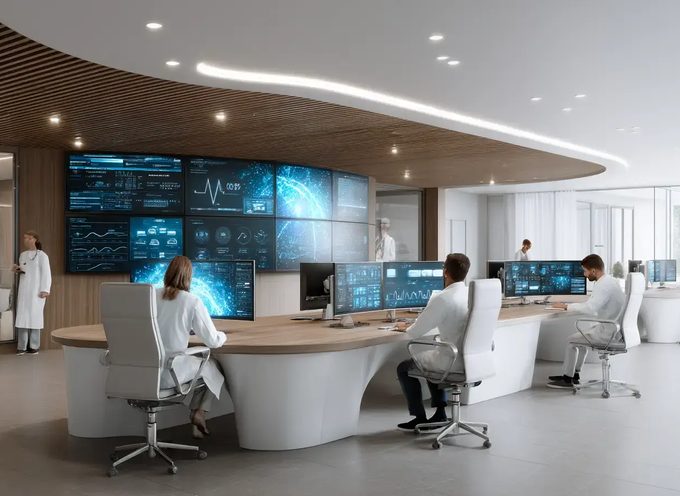
Hospitals combine highly sensitive data with medical technology that may not be altered freely after approval, and with operations that have no downtime. Sector-specific security standards set the frame; the hurdle sits in daily practice: shared workstations, devices from many manufacturers on one network, and staff who in an emergency treat first and log in second. Only what does not lengthen the clinical workflow holds — everything else gets bypassed.
Financial Services and Insurance
Hardly any sector is supervised this densely: regulatory requirements for IT, rules on digital operational resilience and card payment standards apply side by side and each demands its own evidence. The effort therefore sits less in the technology than in the completeness of the documentation and in outsourcing management — the service provider of a service provider belongs in the picture. What is wanted are profiles fluent in audit language and in technology at the same time.
Energy, Water and Critical Infrastructure
Operators of critical plants live with the hardest combination: control technology with a long service life, telecontrol links across the territory, legally required attack detection and a duty to supply that makes maintenance windows expensive. Progress here lies in segmentation, controlled access and a detection that also works where no security agent may be installed. The precise scope depends on thresholds and belongs to be checked, not estimated.
Industry and Manufacturing
In networked plants two cultures meet: IT thinks in update cycles, automation engineering thinks in plant availability. A restart at the wrong moment costs output immediately, which is why classic tools often may not be deployed. What works is the separation of office and production network, a controlled remote maintenance path for machine suppliers and passive detection inside the plant network — the IEC 62443 series serves as the framework.
Automotive and Supplier Industry
Pressure here comes from two sides. Inward, clients require an audited handling of engineering information before any data is exchanged at all. Outward, the product itself is connected: control units, diagnostic interfaces and over-the-air updates need security management across the lifecycle as described by ISO/SAE 21434. For suppliers that means two parallel strands of evidence — one for the company, one per component.
Public Administration and Authorities
Public bodies work inside their own framework: the BSI IT-Grundschutz supplies modules and requirements that audits are based on. Long procurement routes and specialist applications nobody can replace at short notice make it harder. What works is less a large program than a defensible prioritization, clear ownership and evidence that stays comprehensible after a change of staff.
Healthcare and Hospitals
Hospitals combine highly sensitive data with medical technology that may not be altered freely after approval, and with operations that have no downtime. Sector-specific security standards set the frame; the hurdle sits in daily practice: shared workstations, devices from many manufacturers on one network, and staff who in an emergency treat first and log in second. Only what does not lengthen the clinical workflow holds — everything else gets bypassed.
Which Security Profiles Get Staffed in Practice
Which profile fits depends on the cut of the work: an assessment of the level of protection calls for a different profile than building an attack detection capability or investigating an incident. The profiles below are the ones asked for most often; the full overview sits on the category page.
/Interim%20CISO%20(Chief%20Information%20Security%20Officer)__banner_image.webp?width=900&height=900&name=Interim%20CISO%20(Chief%20Information%20Security%20Officer)__banner_image.webp)




/Freelance%20Application%20Security%20Engineer%20(AppSec)__banner_image.webp?width=900&height=900&name=Freelance%20Application%20Security%20Engineer%20(AppSec)__banner_image.webp)
/QRadar)__banner_image.webp?width=900&height=900&name=QRadar)__banner_image.webp)



The Stages of a Security Program
Scope and duration depend on size, system landscape and data situation; the sequence does not: first know what is there, then assess it, then close the most dangerous paths, then evidence it. No stage is skipped; the only shortening happens where dependable groundwork already exists.

1. Record the Estate and Its Exposure

2. Assess Risks and Prioritize the Paths

3. Set the Measures and Assign Ownership

4. Implement Without Stopping Operations

5. Rehearse Detection and Emergency Procedures

6. Produce the Evidence and Make It Repeatable
-
/Interim%20CISO%20(Chief%20Information%20Security%20Officer)__banner_image.webp?width=400&height=250&name=Interim%20CISO%20(Chief%20Information%20Security%20Officer)__banner_image.webp)
Interim CISO (Chief Information Security Officer)
€1,100 – €1,900 per day
-

Freelance OT/ICS Security Consultant
€1,100 – €1,850 per day
-

Freelance Zero Trust Architect
€1,100 – €1,800 per day
-

Freelance PAM Specialist (CyberArk/BeyondTrust)
€1,100 – €1,750 per day
-

€1,000 – €1,650 per day
-

€1,000 – €1,650 per day
-

€1,000 – €1,600 per day
-

€1,000 – €1,600 per day
-

€950 – €1,550 per day
-

€950 – €1,550 per day
-

€950 – €1,500 per day
-

Freelance ISO 27001 Consultant
€950 – €1,500 per day
-

Freelance Business Continuity Manager
€900 – €1,450 per day
-

Freelance Data Protection Consultant
€850 – €1,400 per day
-

€800 – €1,400 per day
-

Freelance Cloud Security Engineer
€800 – €1,400 per day
-

Freelance Incident Response Specialist
€750 – €1,300 per day
-

Freelance Digital Forensics Analyst
€750 – €1,300 per day
-
/Freelance%20Application%20Security%20Engineer%20(AppSec)__banner_image.webp?width=400&height=250&name=Freelance%20Application%20Security%20Engineer%20(AppSec)__banner_image.webp)
Freelance Application Security Engineer (AppSec)
€750 – €1,300 per day
-

€750 – €1,250 per day
-

Freelance Cybersecurity Consultant
€650 – €1,250 per day
-

Freelance Security Awareness Trainer
€700 – €1,200 per day
-
/QRadar)__banner_image.webp?width=400&height=250&name=QRadar)__banner_image.webp)
Freelance SIEM Engineer (Splunk/QRadar)
€650 – €1,200 per day
-

Freelance Vulnerability Management Specialist
€600 – €1,000 per day
Excellent. We are not the only ones who think so.
consultingheads has received several awards from leading trade magazines and independent third parties.


.png?width=260&height=392&name=consultingheads-kununu-top-company-2023%20(1).png)