





Innovation Management Consulting
Innovation Management: From Idea to Market-Ready Product
Innovation management is how a company organizes the work on what it will sell tomorrow: defining search fields, collecting and evaluating ideas, testing concepts, and carrying the viable ones through into a product, a service, or a new business model. It rarely becomes urgent because ideas are missing. It becomes urgent because they are left lying around — because nobody decides which one is pursued, because day-to-day business absorbs every free hour, or because a proven product is visibly losing its margin. What it takes is a small set of named search fields, criteria everyone accepts, a process with real decision points, and an organization in which discontinuing a project counts as a result. That is the ground an innovation consultant works on — not the ideas themselves.

Leading companies trust our network















What Innovation Consulting Delivers — and What It Does Not

Innovation consulting — depending on the provider also called innovation management consulting, and the person doing the work an innovation consultant, an innovation management consultant or simply an innovation manager — works on the question of why ideas do not turn into products, and on the specific point where the path actually stalls. Search fields, evaluation criteria, decision points and ownership of new projects are its subject. The creative work stays in the house: market knowledge, technical depth and closeness to the customer sit where they are used every day.
It first names the bottleneck. The path from idea to product has three bottlenecks in sequence: too few usable ideas, no decision on the ones that exist, and no capacity for the ones that were chosen. In most companies exactly one of them is the real constraint — and it is rarely the first. Running an ideas campaign while two hundred unevaluated proposals sit in a spreadsheet only postpones the problem.
It makes the evaluation reviewable. Projects seldom fail on the quality of the idea; they fail on missing criteria: who decides, on what basis, with what budget, by when. A sound evaluation keeps market assumption, technical feasibility and economics apart instead of blending them into one impression, and it names the assumption that has to hold before more money is committed.
It keeps the path to market open. Between a confirmed concept and a market-ready product sit prototype, manufacturability, regulatory approval, price and a sales force that has to be able to explain the new thing. This is where projects lose their effect: responsibility moves into the line organization, and nobody there was waiting for it.
What it does not do. It does not replace a portfolio decision by management: what share of revenue should come from new products in future is a question for the owners. It does not replace a development department either — engineering, software and regulatory approval stay with your functional areas or a contracted partner. And it does not answer how a business scales into new markets; that belongs to growth strategy and follows a different logic.
What Makes Innovation Work Hard, Industry by Industry
The demand to bring something new into being is the same everywhere; the effort sits in completely different places. In mechanical engineering manufacturability decides whether an idea succeeds, in medical technology regulatory approval, in retail the speed from sample to shelf, and in the energy sector regulation. Whoever learns these differences only during a running project pays for them in time.
That is why we staff for industry experience: with experts who know the approval routes, the usual development cycles, the supplier structures and the points at which comparable projects have gone wrong before. The basis is an expert network spanning more than 25 functional areas, from which profiles for strategy, product development and implementation can be combined. We work regularly in the industries below — each tile names what sets the pace there and what progress is measured by.
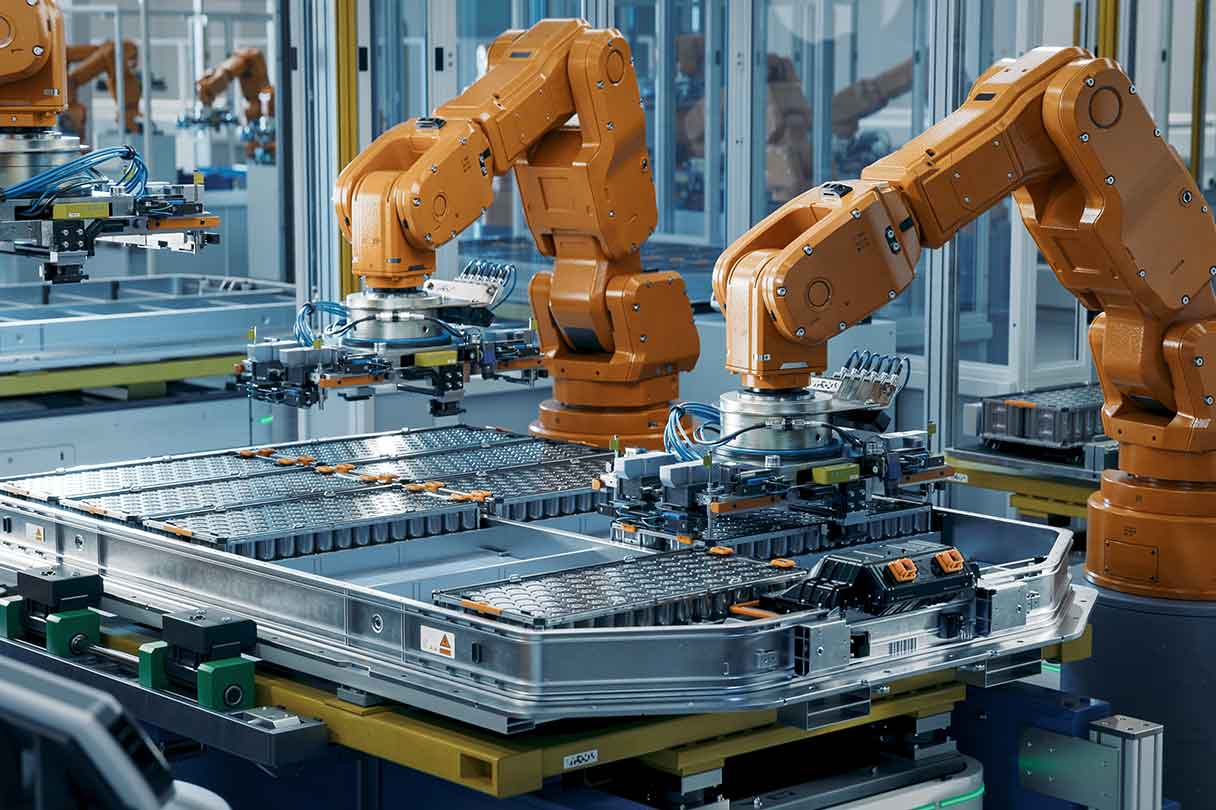
Industry & Mechanical Engineering
In machinery and plant engineering the value of an idea is decided by manufacturability. A concept that works in the pilot plant but calls for special parts, new joining processes or extra inspection steps becomes expensive in series production — and that only shows up in the costing. We bring development, design engineering, procurement and manufacturing to the same table early, order the development portfolio by value contribution and settle which projects belong in a variant and which in a genuinely new development. Often the larger lever is not the machine but the service around it: remote maintenance, spare parts supply, availability commitments. Progress is measured by the time to series release, by target manufacturing cost and by the revenue share of products introduced in recent years.

Automotive & Suppliers
Suppliers and manufacturers develop against someone else's clock: the customer sets the date, regulation sets the boundary conditions, and electrification and software-defined vehicles move whole assemblies. Innovation work here means first sorting your own portfolio by which parts will still be needed in five years. On top of that comes the shift from component to function: whoever sells software sells updates rather than units, and that needs a different kind of contract. Progress is measured by maturity levels per milestone and by the share of development that goes into new drivetrain and software projects.

Pharma & Medical Technology
Here regulatory approval sets the pace. Evidence base, standards landscape and documentation duties determine how an idea has to be run, and documentation caught up late costs more than the development itself. Innovation work therefore means carrying regulatory requirements in the concept from the start and testing early what carries the greatest risk. Digital applications additionally change reimbursement questions and the way hospitals are worked with. Progress is measured by the time to approval and by the effort behind the technical documentation.

Consumer Goods & Retail
In consumer goods, speed is the real subject: from sample through listing to the shelf or the shop, months often pass in which the occasion for the idea has already moved on. What decides is an orderly route for assortment novelties, clear rules for stopping, and an honest view of how many variants the assortment carries. More value is often created by taking weak items out than by adding new ones. Progress is measured by the revenue share of new items and by the time from concept to listing.

Energy & Utilities
Energy suppliers develop inside a frame they do not set themselves: subsidy schemes, grid connection rules and market design decide when a business model carries at all. Innovation work here means cutting projects into stages that keep a value even when the conditions change, and taking the difference between pilot plant and regular operation seriously — most projects fail at the transition, not in the pilot. Progress is measured by the number of pilots that reach regular operation and by the contribution margin of the new offering.

IT & Software
Software houses and IT providers have the opposite problem: ideas are plentiful, the bottleneck is development capacity and the question of what gets a place on the roadmap. Innovation work here means holding the product portfolio against customer benefit and cost of operation, and measuring new features against a testable assumption instead of the wish of the loudest customer. Artificial intelligence sharpens this: it produces many prototypes, few of which survive operation, support and a pricing model. Progress is measured by the adoption of new features and by the share of recurring revenue.
Industry & Mechanical Engineering
In machinery and plant engineering the value of an idea is decided by manufacturability. A concept that works in the pilot plant but calls for special parts, new joining processes or extra inspection steps becomes expensive in series production — and that only shows up in the costing. We bring development, design engineering, procurement and manufacturing to the same table early, order the development portfolio by value contribution and settle which projects belong in a variant and which in a genuinely new development. Often the larger lever is not the machine but the service around it: remote maintenance, spare parts supply, availability commitments. Progress is measured by the time to series release, by target manufacturing cost and by the revenue share of products introduced in recent years.
Automotive & Suppliers
Suppliers and manufacturers develop against someone else's clock: the customer sets the date, regulation sets the boundary conditions, and electrification and software-defined vehicles move whole assemblies. Innovation work here means first sorting your own portfolio by which parts will still be needed in five years. On top of that comes the shift from component to function: whoever sells software sells updates rather than units, and that needs a different kind of contract. Progress is measured by maturity levels per milestone and by the share of development that goes into new drivetrain and software projects.
Pharma & Medical Technology
Here regulatory approval sets the pace. Evidence base, standards landscape and documentation duties determine how an idea has to be run, and documentation caught up late costs more than the development itself. Innovation work therefore means carrying regulatory requirements in the concept from the start and testing early what carries the greatest risk. Digital applications additionally change reimbursement questions and the way hospitals are worked with. Progress is measured by the time to approval and by the effort behind the technical documentation.
Consumer Goods & Retail
In consumer goods, speed is the real subject: from sample through listing to the shelf or the shop, months often pass in which the occasion for the idea has already moved on. What decides is an orderly route for assortment novelties, clear rules for stopping, and an honest view of how many variants the assortment carries. More value is often created by taking weak items out than by adding new ones. Progress is measured by the revenue share of new items and by the time from concept to listing.
Energy & Utilities
Energy suppliers develop inside a frame they do not set themselves: subsidy schemes, grid connection rules and market design decide when a business model carries at all. Innovation work here means cutting projects into stages that keep a value even when the conditions change, and taking the difference between pilot plant and regular operation seriously — most projects fail at the transition, not in the pilot. Progress is measured by the number of pilots that reach regular operation and by the contribution margin of the new offering.
IT & Software
Software houses and IT providers have the opposite problem: ideas are plentiful, the bottleneck is development capacity and the question of what gets a place on the roadmap. Innovation work here means holding the product portfolio against customer benefit and cost of operation, and measuring new features against a testable assumption instead of the wish of the loudest customer. Artificial intelligence sharpens this: it produces many prototypes, few of which survive operation, support and a pricing model. Progress is measured by the adoption of new features and by the share of recurring revenue.
Who Staffs an Innovation Project












The Path From Idea to Market
How long the steps take depends on industry, regulatory situation and portfolio; their order does not: first narrow down, then evaluate, then test, then launch, then hand over. Steps that are skipped are caught up later at a higher price.

Narrow Down the Search Fields

Collect Ideas and Decide

Concept and Feasibility

Prototype and Test

Market Launch

Handover to the Line Organization
-

€1,200 – €1,800 per day
-

€900 – €1,400 per day
-

Freelance Product Manager, Strategy
€850 – €1,250 per day
-

Freelance Digital Product Manager
€750 – €1,100 per day
-

€700 – €1,000 per day
-

€650 – €950 per day
-

€600 – €950 per day
-

€550 – €850 per day
-

€500 – €800 per day
Excellent. We are not the only ones who think so.
consultingheads has received several awards from leading trade magazines and independent third parties.



.png?width=260&height=392&name=consultingheads-kununu-top-company-2023%20(1).png)