





Current language: English
Our services
Support for growth strategies, transformations or M&A processes.
Our freelance experts have in-depth specialist knowledge in their field.
We provide you with experienced interim managers who take on responsibility.
Customized expert teams for complex projects
We find the best experts for these companies
Private equity
Efficient support throughout the deal cycle
Management consultancies
Flexible resources for demanding projects
Medium sized business
Consulting expertise for SMEs
Corporates
Technical and management experts for operational excellence
Scale-ups
Strategic & operational support for growth
Pricing Authority

What Pricing Consulting Delivers — and What It Does Not

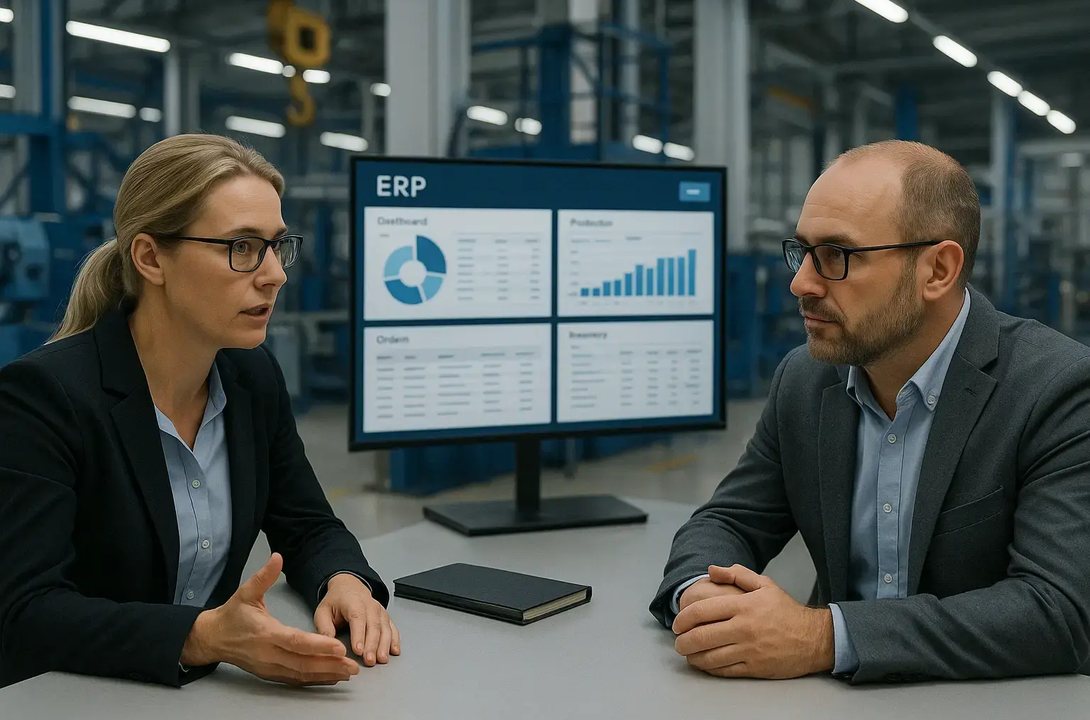
Managers reviewing an analysis of how prices come about inside a companyIn most companies the price is not decided, it is conceded. The price list is a starting point; what a customer ends up paying grows out of a chain of small concessions — a discount in the annual review, a special condition for a tender, freight that is not charged, an extra service nobody bills any more. Each of these concessions was defensible on its own. Together they produce a price picture nobody ever resolved on and that rarely surfaces in reporting.

Pricing consulting therefore does not start at the level of the price but at the authority over it: who may decide which price in day-to-day business, on what basis, and with what visibility? Only then does it make sense to talk about pricing strategy, pricing model and price structure — which is what most pricing strategy consulting engagements are actually asked to sort out. A price list nobody keeps to is not a pricing strategy but a declaration of intent, and that is exactly why a price increase on paper so often yields less than the calculation promised.

For the work itself that means three things: preparing the order and invoice data you already hold so that the realized price per customer, product and channel becomes visible; aligning the pricing logic with the value the service creates instead of with your own costs alone; and writing the rules for discounts, terms and approvals so that they stay usable in a customer conversation. Anyone looking for a pricing consultancy is usually looking for exactly these deliverables.

What pricing consulting does not deliver. It does not know your market better than you do, and it does not hand over a number you simply plug in. It also does not replace a legal review: price agreements with competitors, resale price maintenance and the exchange of price-relevant information in a competitive setting are narrowly limited under antitrust law and belong in front of a lawyer in the individual case before implementation; our work places the question, it does not settle it. And it takes nobody’s decision away to hold a price even when an important customer is on the phone.

Findings

When Outside Support in Pricing Is Worth the Effort

Not every pricing question needs help from outside. Anyone who has a dependable analysis of the realized price, somebody in-house with pricing experience and a settled approval logic will get further alone. The findings below, by contrast, turn up regularly wherever an independent view and additional capacity make the difference. They are examples from our work, not a complete list.

1. Costs Have Risen, Prices Have Not

  • Material, energy or wages have gone up; the price list dates from before that.
  • The price increase keeps being postponed because nobody has prepared the reasoning for the individual customer groups.

2. The Same Service Fetches Very Different Prices

  • Two comparable customers pay markedly different amounts without anyone being able to name a factual reason.
  • The spread only becomes apparent once somebody sorts the transaction data by realized price.

3. Discounts and Terms Have Grown Rather Than Been Designed

  • Bonuses, cash discounts, advertising allowances and special conditions sit in different systems and contracts.
  • What a customer receives in total cannot be answered without several days of manual work.

4. A New Offering Needs Its First Price

  • With no reference point in-house a markup is added on calculation grounds — the value at the customer stays out of the picture.
  • In subscription and usage-based models the build of the model decides more than the level of the entry price.

5. Every Price Is Negotiated One by One

  • Approvals run as single-case decisions all the way to the management board, and every exception justifies the next one.
  • Without guard rails the negotiating strength of the other side becomes the most important price factor.

6. A Price Adjustment Is Due and Has to Be Explainable

  • Announcement, reasoning and the handling of objection shape the outcome more than the percentage does.
  • Existing customers, running framework agreements and tenders each need their own route.

Does your situation show up in one of these findings? A short phone call is enough to sort which analysis is needed first, where the largest unused lever sits in your price picture — and whether it takes support from outside at all.

Areas of Work

Pricing Strategy Consulting: The Areas of Work at a Glance

The areas of work interlock, yet they are rarely commissioned all at once. It usually starts with the analytics, because without a visible realized price every further decision rests on assumption. After that the starting position decides: a new offering leads to the pricing model, a grown discount picture to the price structure, sustained cost pressure to price enforcement. We staff one area on its own or several together — pricing consulting is not a fixed package here but the staffing of the gap that actually exists in the house.

Pricing Strategy and Positioning

What a price is meant to stand for: premium, middle ground or price leadership — and what that decision means for range, channels and communication. It includes a pricing policy that fits the positioning and a sober read on which pricing strategy the market will carry. Market and scaling questions we only touch on and point to growth strategy consulting.

Pricing Model and Monetization

The question of what is actually being paid for: per unit, per user, per use, by subscription or as a package with service components. Value based pricing starts here: the price follows the value at the customer instead of your own costs. In recurring models tiers and add-on services drive revenue more than the entry price does.

Price Structure, Terms and Discount System

Ordering list price, tiers, bonuses, cash discounts and allowances into a terms system that can be reasoned through and recalculated — with a price differentiation that hangs on traceable characteristics rather than on negotiating skill. Discount management begins by making visible what is conceded today. Where a terms system touches resellers, its limits belong in front of a lawyer.

Price Enforcement and Negotiation

The part where pricing projects come apart: preparing a price increase, giving it a reason and holding it in the conversation. That includes lines of argument per customer group, an order for the announcement, rehearsed price negotiation and clear escalation paths. The quotation and selling process as a whole sits with our sales consulting; here it is the pricing logic inside it.

Pricing Analytics: Elasticity, Costing and Margin View

Making the realized price per customer, product and channel visible from the order and invoice data you already hold, estimating price elasticity and checking price calculation and contribution margins against each other. The basis is the systems that stand in the house anyway. Building the reporting platform belongs to data analytics consulting, the earnings view behind it to our corporate finance consulting.

Pricing Organization, Governance and Approvals

Who may promise which price, from which deviation onwards who decides, and where is that documented? It covers tiered approvals, a price controlling that shows deviations early, and the decision whether price management is run as a function of its own or split between sales and controlling.

Which of these areas has to take hold first can be placed in a short conversation. Describe how prices come about today — you get an assessment and one named first step, not a presentation.

Engagement Formats

Four Ways Pricing Work Gets Commissioned — From a Single Question to Price Responsibility on Loan

Support in pricing is bought in very different formats, and the outcome is often decided not by the method but by the shape: how much capacity from outside, with what authority, over what period. The four shapes below cover most of what is actually commissioned in pricing; transitions and combinations are the normal case.

Single Question
Price Analysis With a Defensible Result

An experienced person works through the transaction data you hold and lays the real price picture open: spread, discount distribution, outliers, contribution margins per customer group. Typically three to six weeks, often part-time, with a result that can be put in front of a management board.

Joint Development
Pricing Model in a Mixed Team

Specialists from outside work with sales, controlling and product management on a new pricing logic. The decisions stay in the house; method and calculation work are added. The most common shape for new offerings and for rebuilding a terms system.

Rollout in the Market
Support Through the Price Rollout

For a price adjustment that is coming up: reasoning per customer group, preparation of the negotiators, company through the first conversations and an evaluation of what was actually carried through. It runs over the length of the rollout, not over the length of a concept.

Mandate With Approval Authority
Price Responsibility on Loan

A person from outside takes over pricing or sales-steering responsibility with approval authority of their own — during a vacancy, while a pricing function is being built, or when decisions need an instance outside the running customer relationships.

Industry Logic

Pricing by Industry: What Sets the Price Logic

Price pressure is felt everywhere; the price logic is not the same everywhere. In plant engineering the revenue arises over years out of project price, spare parts and service, in retail within one season through promotions and terms, in digital offerings through the structure of a recurring model. The questions differ accordingly: where is the price formed at all, which data exists for it, who negotiates it, and which contractual and regulatory conditions limit the room to move? We staff pricing work by industry experience: out of 25 functional areas and more than 300 role profiles come people who have seen the price mechanics of the respective industry from the inside — because a terms system in food retail follows other rules than a spare part price in mechanical engineering. The six fields below are examples; they do not cover our work completely.

Pricing in machinery and plant engineering: an automated production line

Machinery and Plant Engineering

Pricing at vehicle manufacturers and suppliers: digital vehicle development

Automotive and Suppliers

Pricing in construction and building materials: a commercial property under construction

Construction and Building Materials

Pricing in retail and consumer goods: a sales floor in specialist retail

Retail and Consumer Goods

Pricing for software and digital products: workstations with analytics screens

Software and Digital Products

Pricing in chemicals, pharma and medical technology: pharmaceutical production

Chemicals, Pharma and Medical Technology

Pricing in machinery and plant engineering: an automated production line

Machinery and Plant Engineering

Pricing at vehicle manufacturers and suppliers: digital vehicle development

Automotive and Suppliers

Pricing in construction and building materials: a commercial property under construction

Construction and Building Materials

Pricing in retail and consumer goods: a sales floor in specialist retail

Retail and Consumer Goods

Pricing for software and digital products: workstations with analytics screens

Software and Digital Products

Pricing in chemicals, pharma and medical technology: pharmaceutical production

Chemicals, Pharma and Medical Technology

Project Types

Pricing Projects — and Where the Effect Becomes Visible

What is actually commissioned in pricing falls for the most part into a few types. Each has a typical starting position, a sequence that has proven itself, and figures from which it can later be read whether anything moved. We deliberately name observation figures and not target values: what a project brings in the end depends on market, starting position and the discipline of the rollout, and cannot be promised up front.

Make Your Own Price Picture Visible

Starting position: there is a price list, but nobody can say what of it is actually earned. The sequence that carries: bring order and invoice data together, break out every deduction down to the net price, show the spread per product and customer group. Observation figures: bandwidth of the realized price per customer group, share of orders below the price floor, number of active special conditions.

Introduce a New Pricing Model

Starting position: a new product, a new service, or the move from one-off sale to a recurring model. First the billing metric is settled, then the structure with tiers and packages, then the transition for existing customers. Observation figures: acceptance rate, switching rate during the transition, revenue per customer against the previous model.

Prepare and Accompany a Price Adjustment

Starting position: cost increases have arrived and are to be passed on. The work does not begin at the percentage but at the segmentation: which customers carry which adjustment, which contracts allow it, in what order it is announced. Observation figures: share of the adjustment actually carried through, churn in the affected segments, time until it is in force.

Reorder Terms and Approvals

Starting position: grown discount and bonus rules that nobody fully surveys any more, and approvals decided case by case. The route runs through a stocktake of all condition types, their reduction to a few justifiable building blocks and tiered approval limits. Observation figures: number of condition types, share of orders with special approval, lead time of a price approval.

Profiles

From Pricing Analytics to Price Responsibility: Profiles We Staff Often

The staffing follows the task: a price analysis needs a different profile than the rebuild of a terms system or the company of a price adjustment in the market. The profiles below we staff particularly often in pricing work — it is an excerpt; further roles are reachable through the category pages.


From Price Analysis to the New Price List: The Sequence

Scope and duration of the steps depend on range breadth, data situation and sales structure; the order does not: first see what is, then settle what shall apply, then build the rules, then carry them into the market. No step is skipped — whoever introduces a new model without a price picture replaces one unknown spread with another.

Step 1: recording the realized price picture from order and invoice data

1. Record the Price Picture

Two to four weeks: order, invoice and terms data are brought together and broken down to the net price actually earned.
Conversations with sales and controlling make visible the concessions that are carried as a discount in no system.
The result is an evidenced picture of the price spread per product, customer and channel.
Step 2: pricing strategy and pricing model are being settled in the leadership circle

2. Fix the Pricing Logic

What is paid for and what the price follows: value, cost, competition or a reasoned mixture of the three.
The positioning is decided, not derived — and with it, which orders you deliberately do not want to win.
Options that are set aside get named instead of quietly dropped.
Step 3: building the price structure, tiers and terms system

3. Build Price Structure and Terms

List prices, tiers, packages and condition types are reduced to a few justifiable building blocks.
Every differentiation hangs on a traceable characteristic — volume, scope of service, contract term — rather than on the course of a negotiation.
Where resellers or competitive relations are touched, the draft goes through a legal review before it is introduced.
Step 4: anchoring approval levels and pricing rules in systems and roles

4. Anchor Rules and Approvals

Approval limits are tiered, stored in the systems and given names rather than function labels.
A price controlling shows deviations monthly, not first at the year-end close.
Whoever negotiates gets guard rails and arguments — rules without reasoning get worked around.
Step 5: carrying the new prices through customer conversations and negotiations

5. Enforce Prices in the Market

Announcement, reasoning and order are planned per customer group instead of the same way for everyone.
The first conversations are accompanied and evaluated while the argument can still be sharpened.
Exceptions are recorded and reasoned — otherwise the old price picture rebuilds itself within months.
Step 6: measuring the effect and handing price responsibility to the organization

6. Measure the Effect and Hand Over

A few figures that stand before the start: realized average price, price spread, discount rate, share of approved exceptions.
Adjustment follows the measured values, not single conversations.
The handover point stands from the beginning: in the end the organization runs its prices itself.
Budget Frame

What Does Pricing Consulting Cost? Daily Rates and Budget Frame

A pricing project has two cost drivers: the daily rate of the specialists on it and the number of days. The second is the larger of the two and is planned for less often. Billing runs through our network on a daily-rate basis, without a project lump sum and without success-dependent components — in pricing of all places, a share in a price increase would be the wrong incentive.

What moves the daily rate. The strongest effect comes from how close a role sits to the pricing decision: whoever represents a price change in front of the management board sits above a role that evaluates and supplies. Next comes the data situation — if order and terms data sit cleanly in one system, the analysis is done in days; if they sit in contracts, spreadsheets and three upstream systems, it becomes weeks of work. Then the industry: regulated markets, framework-agreement business and distribution stages call for extra experience that narrows the candidate pool. The remote share works both ways — analytics and modelling run largely independent of location and open the pool beyond your own region, while accompanying negotiations and annual reviews need presence. Last, the project length: an assignment over nine months sits below a six-week assignment with the same onboarding effort, per day.

The ranges shown on our role pages. For the analytical basis of a pricing project — data preparation, evaluation, contribution margin accounting — €650 – €1,150 per day (Freelance Data Analyst, Freelance Forecasting Analyst, Freelance Business Controller). For the pricing and sales-steering roles themselves €750 – €1,040 (Freelance Key Account Manager, Freelance Revenue Operations Specialist, Freelance Pricing Strategist). For concept and strategy work on positioning and pricing model €850 – €1,600 (Freelance Product Manager, Strategy, Freelance Strategy Consultant). Price responsibility on loan with approval authority sits above that, at €1,280 – €2,500 (Interim Sales Manager, Interim CSO, Interim CFO). All figures named are ranges and not fixed prices; the concrete rate is settled per assignment before the engagement.

Budget in stages rather than as one sum. Every stage ends with a decision that may also read “no further”: the analysis with an evidenced price picture, the concept with a decided pricing logic, the pilot with one customer group or product line in which the new system is tried, the rollout with the handover to your own organization. Whoever commissions the analysis on its own first buys the basis for every further decision and keeps the choice of whether to carry on at all.

The difference to other routes. A specialized pricing boutique brings method and industry comparisons and works in a fixed team formation. The route through individual specialists on time is steerable in smaller pieces: you staff the role that is missing and end the assignment when the task is done. Pricing software replaces no pricing decision — it calculates and maintains what was settled as logic beforehand; its licence and running costs we do not quantify.

The fitting profiles do not sit in a single area. Pricing-related roles we carry mostly under Sales & Business Development — there you find, among others, the Freelance Pricing Strategist, the profile usually meant when a pricing analyst or a pricing manager is being looked for. Whoever searches for a management consultancy for price management is, as a rule, looking for exactly this staffing and not for a permanent hire. The arithmetic side of a pricing project we staff out of Finance & Controlling, the evaluation side out of Data Engineering & Data Science, the packaging and positioning side out of Product Management & UX and Marketing. An overview of all functional areas stands under Experts by Area.

Why Now

Prices Move Faster Than the Rules by Which They Are Set

+3.0 %

Producer prices for industrial products in July 2026 against the same month a year earlier. Whoever passes cost increases on has to be able to explain them.
Federal Statistical Office (Destatis)

+5.4 %

Intermediate goods in the same month — the cost side moves faster than the overall picture, and it is exactly that gap that lands in the margin.
Federal Statistical Office (Destatis)

+2.8 %

Consumer prices in July 2026 against the same month a year earlier. Price changes are followed more closely than they were a few years ago.
Federal Statistical Office (Destatis)
Frequently Asked

Frequently Asked Questions About Pricing Consulting

Pricing consulting works on the question of how a company forms, structures and enforces its prices: pricing strategy, pricing model, price structure with terms and discounts, price enforcement in sales, pricing analytics and the organization behind it. It pays off when the realized price spreads widely, when cost increases could not be passed on, when a new offering needs its first price, or when discounts and special conditions have grown over the years without anyone knowing the whole picture. It is less useful where procurement or reimbursement rules determine price formation almost entirely from outside.
Roughly, they are told apart by their reference point: cost-oriented (a markup on production or purchase cost), competition-oriented (aligned to market prices and price gaps), and value-oriented, that is value-based pricing (aligned to the economic value at the customer). On top come time patterns such as skimming through a high entry level or penetration through a low one, plus price differentiation by volume, region, channel, customer group or scope of service. Most often it is a mixture: cost accounting supplies the floor, competition the frame, value the reason for the distance inside it.
From inside: production and purchase costs, contribution margin targets, capacity utilization, range breadth and the question of how far a service can be set apart from competitors. From outside: willingness to pay and the alternatives customers hold, competitive intensity, the bargaining power of retail, contractual ties and regulatory requirements. What gets underestimated most is the organizational factor: who may promise prices in day-to-day business, and whether deviations become visible, often influences the average price achieved more than the level of the price list.
Costing through cost plus markup reliably answers where the floor lies. It says nothing about what a customer is willing to pay: two products with the same production cost can create very different value, and then the same markup is once too high and once too low. What makes sense is therefore a second line of reasoning alongside the calculation — the question of what economic difference the service makes at the customer and which alternative they would otherwise hold. The calculation stays the safeguard downwards; the value view sets the distance upwards.
Dynamic pricing means adjusting prices by rule and frequently to changed conditions: demand, remaining capacity, competitor prices, timing. It fits where capacity is perishable or prices are easy to change — travel, events, online retail, energy. It presupposes dependable data, a clear rule logic and the willingness to explain price changes to customers. In industrial business with framework agreements and annual arrangements the field of application is narrow; there, terms and price escalation clauses work harder than a same-day adjustment.
With a reason that holds for the particular customer group, and with an order. Traceable are evidenced cost changes, an extended scope of service or contractually agreed indexation; blanket percentages across all customers convince little. Just as important is the preparation of the negotiators. The legal frame has to be observed: every company may decide price increases for itself, while coordination with competitors or an exchange of planned prices in a competitive setting is not permitted under antitrust law. Whether a concrete measure is admissible belongs in front of a lawyer in the individual case — this placing does not replace legal advice.
Billing runs through our network on a daily-rate basis. The ranges on our role pages run from €650 – €1,150 for analytical profiles through €750 – €1,040 for pricing and sales-steering roles and €850 – €1,600 for concept and strategy work up to €1,280 – €2,500 for price responsibility on loan. The budget, however, comes out of daily rate times days: a price analysis typically sits at three to six weeks of assignment, often part-time; the rebuild of a terms system including its rollout in the market stretches over months. We recommend commissioning in stages and deciding anew after each one.
Seniority and how close the role sits to the decision, the data situation in the house, the industry, the remote share and the project length. The strongest effect comes from the combination of decision proximity and industry experience: a profile that has already carried a price change through framework-agreement business twice is scarce. The second strongest is the data situation, because it decides the number of days — and the days move the budget more than the rate does.
You can rely on us

Excellent. We are not the only ones who think so.

consultingheads has received several awards from leading trade magazines and independent third parties.


Siegel_TOP-Berater
consultingheads-award-top-company-2025-kununu
consultingheads-brand-eins-beste-berater-2025-1
consultingheads-kununu-top-company-2024
consultingheads-brand-eins-beste-berater-2024-3
consultingheads-kununu-top-company-2023 (1)
consultingheads-brand-eins-beste-berater-2019-1
consultingheads-brand-eins-beste-berater-2021
consultingheads-brand-eins-beste-berater-2020
BrandEins_Berater2026_Logo_DE_basic
Siegel_TOP-Berater
consultingheads-award-top-company-2025-kununu
consultingheads-brand-eins-beste-berater-2025-1
consultingheads-kununu-top-company-2024
consultingheads-brand-eins-beste-berater-2024-3
consultingheads-kununu-top-company-2023 (1)
consultingheads-brand-eins-beste-berater-2019-1
consultingheads-brand-eins-beste-berater-2021
consultingheads-brand-eins-beste-berater-2020
BrandEins_Berater2026_Logo_DE_basic
bildmarke
brand eins Best Management Consultants 2026 — consultingheads
Next Step

Let's talk about your pricing project.

A placement of your price picture in twenty minutes
One concretely named next step
Free of charge, and no sales pressure
Twenty minutes in which we place your starting position in pricing and name which step comes first — and whether we are the right partner for it.