






Logistics Consultants for Warehouse, Transport and Handling
Logistics Consulting: Shorter Distances, Fewer Touches, More Reliable Dates
Logistics consulting works on the physical layer of the supply chain: on sites and network structure, on warehouse and picking, on transport, freight and handling, on customs and dangerous goods obligations, and on the systems that steer all of it. The subject becomes urgent when shipment volumes or item counts grow faster than the available space, when freight and warehouse costs eat into the margin, when a contract with a logistics service provider is running out, or when delivery dates slip although the goods are already in the building. What it takes is reliable volume and distance data, a clear idea of which touches on the goods actually create value — and people who size a design so that it also holds up in operation.
Leading companies trust our network

What Logistics Consulting Achieves — and What It Does Not
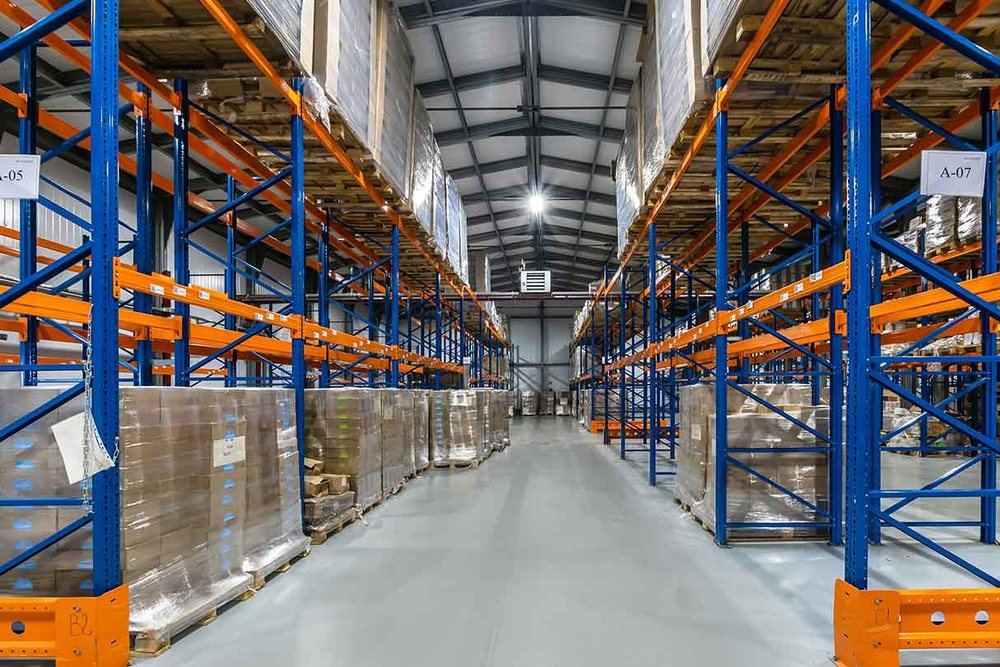
Logistics consulting — depending on the firm also called logistics optimization, logistics planning, intralogistics consulting or management consulting for logistics — deals with the part of the supply chain you can put your hands on. Three quantities determine the cost there, and each one is measurable on its own: the distance an item travels, the touch — every pick-up, repack and rebooking — and the dwell, the time in which goods only tie up space and capital.
The uncomfortable part of that arithmetic: most of the additional touches did not originate in logistics at all. A packaging unit that does not match the shelf height; an ordering rhythm that creates partial quantities; a site decision taken ten years ago; a range that has grown by variants — every one of these settlements is worked off in the warehouse every day. Anyone who only starts at execution makes the working-off faster, not rarer. That is why the work begins with a measurement and not with a target picture.
What it does not do. It does not replace a warehouse or vehicles, it does not bring along a service provider who permanently runs below market price, and a floor space that is simply too small does not get bigger through arithmetic. Nor does it take the decision off your hands whether you operate yourself or put the work out to tender — it puts the numbers beside that decision that make it measurable. And it does not replace planning discipline: where sales volumes are not planned, every design stays a bet on the peak.
One level above the physical layer sits supply chain consulting: inventory strategy, network design and the question of what sales, purchasing and production agree on. In larger undertakings the two run together; the way in stays different — here through the goods, there through the planning.
When External Support in Warehouse and Transport Pays Off
Very few logistics tasks require outside help. If the quantities, routes, and costs for each shipment are known, and the team has time to plan the layout, you’ll reach your goal faster on your own. When the following signs appear, this calculation no longer holds true, and there’s a structural reason for it: A logistics team redesigns a warehouse or a transport network every few years—and always for the same location. Anyone who regularly calculates such designs for different facilities knows the key metrics that cause a design to fail in its second year.
1. The Space Is Full and Volume Keeps Growing
- Aisles are cluttered, incoming goods are piling up in the yard, and picking routes are getting longer by the week.
- The instinct is to rent additional space; often, there’s room for improvement in storage strategy, handling of partial quantities, and item distribution.
- A layout analysis quickly reveals how much capacity can be achieved without new construction.
2. Freight Costs Rise Faster Than Volumes
- Partial loads, express shipments, and follow-up deliveries are piling up, with no one taking responsibility for paying for them individually.
- The cause usually lies in ordering patterns and minimum order quantities, and less often in the freight rate.
- An analysis of the shipment structure separates the pricing issue from the volume issue.
3. A Logistics Contract Is Up for Retender
- Transportation, warehouse services, or an entire contract logistics project are coming to an end; the last time a request for proposal was issued was years ago.
- A clearly defined scope of work and a quickly drafted request for proposals can often make a difference of double-digit percentages in the final result.
- Those who have been managing the service provider themselves for years enter this round with little idea of the outcome.
4. Delivery Dates Slip Although the Goods Are in the Building
- Inventory levels match in the system but not on the shelf; waiting times at the gate and missed time slots push whole routes back.
- Faults of this kind sit at the handovers — goods receipt to put-away, picking to dispatch, dispatch to the carrier.
- What gets measured is the punctuality of every single handover, not the delivery reliability of the chain as a whole.
5. A Warehouse or Transport System Is About to Be Introduced
- Whether it’s warehouse management, transport management, or a forklift guidance system—the impetus often comes from IT or corporate headquarters.
- A tool merely codifies what has already been clarified from a business perspective—storage-location logic, booking points, labeling, and responsibility for dimensions and weights.
- If this step is skipped, the old process simply gets a user interface and a license invoice.
6. A Site or Network Question Is on the Table
- A second warehouse, a relocation, a central warehouse instead of three regional warehouses—or exactly the opposite.
- Decisions like these have long-term implications and can only be calculated using data on volume, distance, and costs.
- The mistake rarely lies in the calculations themselves, but rather in the assumptions about how shipments will develop.
Do any of these warning signs sound familiar? A brief conversation is all it takes to get an initial idea—which of the three factors—distance, contact, or downtime—is driving up your costs, where the next measurement should be taken, and whether you need an outside expert to help.
The Levers of Logistics Consulting: From Floor Space to the Last Mile
Each of these levers can be assigned individually, and almost none of them operates in isolation. In most cases, a task begins in one area and triggers the adjacent area to follow suit, because both require the same data: A warehouse design without knowledge of the shipment structure remains just a draft, and a new transportation concept that cannot find accurate entries in the system cannot be substantiated afterward. Where you start is determined by the weakest link in the organization—space, distance, or data availability.
Network Structure, Sites and Space
How many warehouses are there and where are they located; which facility serves which region; and which spaces are being leased, built, or closed. The calculations are based on shipment volumes by postcode area, transport and freight costs, space requirements by product category, and rental rates in the relevant regions. The result is a network scenario with a timeline and a break-even point: the volume at which it becomes more efficient than the current setup and the volume at which it would no longer be so.
Warehouse, Picking and Intralogistics
Storage-location strategy, selection of shelving and loading aids, picking methods, replenishment control, packing stations, and goods-out areas—plus the question of what level of automation best suits the product mix. The key factor almost always lies in the layout rather than the technology: A fast-moving-item zone based on actual access rates saves more walking distance than an additional piece of equipment.
Transport, Freight and Modes of Transport
Transport network, choice of transport mode, route planning, cargo space utilization, and freight cost structure—from general cargo to less-than-truckload and full truckload shipments, all the way to the last mile. Another factor under scrutiny is which shipments actually need to be made: consolidation, delivery frequencies, and minimum quantities have a greater impact on freight costs than rate negotiations.
Contract Logistics and Provider Management
In-house operation or award, tailoring the scope of work, pricing models based on transactions or floor space, consistent performance metrics, interfaces, and handoff points. In addition, contract management during the term of the agreement: A service provider delivers what is measured—not what was intended.
Logistics IT: Warehouse Management, Transport Management, Data Quality
Selection and implementation of warehouse management and transport management systems, integration with the ERP, scanner and labeling concepts, booking points, and the master data without which none of this works: dimensions, weights, loading aids, and dangerous goods codes. We remain vendor-neutral when selecting a system; decisions regarding warehouse logic and booking points are made beforehand.
Customs, Dangerous Goods and Documentation Duties
Customs clearance and preferential origin, proofs of origin, export controls and sanctions screening, dangerous goods regulations by mode of transport, temperature control, and documentation in the cold chain. These requirements determine transit times and storage periods—and they are the very reason why an otherwise sound plan fails during an audit.
A brief conversation is enough to get a rough idea of where the greatest impact lies for you—including the uncomfortable answer if a project isn't worth the effort.
How External Logistics Experience Comes On Board
In addition to depth of expertise, access to the operations side is a key factor in logistics: Anyone who changes warehouse procedures must be able to justify those changes to shift supervisors, maintenance staff, sales, and service providers. There are four common paths of entry, and they differ less in terms of technical knowledge than in terms of the level of commitment required.
Second Opinion on a Design
One expert on a tightly framed brief: a distance survey in one warehouse, a check on a network variant, or a second look at a planner’s sizing. What comes back is a written note with numbers and a recommendation — no programme structure around it.
External Capacity in the Logistics Team
Two to five external experts will work side by side with your dispatchers, warehouse managers, and planners; you retain overall management responsibility. This is the standard approach for reorganizations and awards, because a new process must be developed right where it will eventually be implemented on every shift.
Logistics Responsibility on an Interim Basis
An outsider manages a location or division and has the authority to make decisions—either because the position is vacant, because a restructuring during ongoing operations requires a second manager, or because a relocation is easier to implement with outside leadership.
Steering a Logistics Tender
A small unit manages the entire award process—from the quantity basis through the specifications to the contract: bidder field, price sheet, consistent key figures, and a handover plan. It does not make decisions; rather, it ensures that the decision-making process is consistent.
Types of Goods and Their Logistics: What Sets the Pace in the Warehouse
Logistics cannot be improved in a way that is independent of the goods, because the goods themselves dictate the rules: Their dimensions determine the type of shelving and loading unit; their shelf life determines handling frequency and temperature control; their hazard class determines storage zones and documentation requirements; their value determines security measures and inventory levels; and their ordering patterns determine picking methods and route planning. In retail, promotional and seasonal peaks dictate the level of expansion; in manufacturing, the production line’s cycle time; in pharmaceutical logistics, proof of an unbroken cold chain; and in the building materials trade, weight and load securing. We therefore staff based on product expertise rather than a “toolkit” of methods: Anyone familiar with fresh produce logistics knows that an hour at the gate is more expensive than a detour; anyone familiar with spare parts logistics knows that the availability of a single item can be more important than the total inventory value of the entire warehouse. The following product types are examples—we’ll clarify in advance which rules apply to your product range.

Retail & E-Commerce
Many small shipments, a high number of SKUs, significant promotional and seasonal peaks, and returns handled as a separate process. The level of expansion isn’t measured by the average, but by the peak week—and by determining which part of that volume can be handled with temporary staff and which part can be managed solely with technology. Key areas include fast-moving zones, picking for additional orders, packaging sizes, and the last mile. Performance is measured in terms of pieces per hour, freight costs per shipment, and returns turnaround time.

Food & Fresh Produce
Short shelf lives, temperature zones, and fixed delivery windows in retail clash with volumes determined by harvests and weather. Time is the critical factor here: An hour-long wait at the gate costs more than a detour, and a break in the cold chain renders the goods unsellable. Key issues include multi-temperature routes, batch traceability, best-before date management, and returnable container cycles. Performance is measured by delivery punctuality and markdowns.
Automotive & Supplier Industry
The production line’s pace dictates logistics, not the other way around. Deliveries must be made in the exact sequence; containers are specified; missing parts cause line stoppages—and special runs are the most costly consequence of a planning error further up the line. Key topics include container circulation, regional freight forwarding, inter-plant transport, and sequencing in the upstream process. Performance is measured in terms of minutes of line downtime and the rate of special trips.
Machinery & Plant Engineering
Short series and a wide variant count, heavy and bulky parts, and on top of that project business with site deliveries and a spare-parts commitment that runs for decades. Standardisation gets you little here; the levers sit in load securing, packaging design for sea freight, spare-parts stocking based on failure patterns, and pre-assembly close to the point of use. What gets measured is punctuality against each construction milestone and spare-parts availability.
Pharma & Medical Technology
Here, the documentation is part of the product. Temperature control, batch and serialization requirements, separate storage areas for controlled substances and restricted inventory, as well as qualified transport routes, determine every design; a change in carrier requires a new qualification. Topics include cold chain validation, emergency supply, and product recalls. Performance is measured by temperature deviations and approval turnaround time.
Construction & Building Materials
Weight, volume, and a unloading location that changes every week: Construction site logistics must adapt to ever-changing construction schedules and unloading windows that no one can guarantee. Topics include silo and bulk material logistics, crane placement areas, load securing, the return of packaging and scrap material, and just-in-sequence delivery for interior finishing. Performance is measured by wait times at the construction site and incorrect deliveries.
Retail & E-Commerce
Many small shipments, a high number of SKUs, significant promotional and seasonal peaks, and returns handled as a separate process. The level of expansion isn’t measured by the average, but by the peak week—and by determining which part of that volume can be handled with temporary staff and which part can be managed solely with technology. Key areas include fast-moving zones, picking for additional orders, packaging sizes, and the last mile. Performance is measured in terms of pieces per hour, freight costs per shipment, and returns turnaround time.

Food & Fresh Produce
Short shelf lives, temperature zones, and fixed delivery windows in retail clash with volumes determined by harvests and weather. Time is the critical factor here: An hour-long wait at the gate costs more than a detour, and a break in the cold chain renders the goods unsellable. Key issues include multi-temperature routes, batch traceability, best-before date management, and returnable container cycles. Performance is measured by delivery punctuality and markdowns.

Automotive & Supplier Industry
The production line’s pace dictates logistics, not the other way around. Deliveries must be made in the exact sequence; containers are specified; missing parts cause line stoppages—and special runs are the most costly consequence of a planning error further up the line. Key topics include container circulation, regional freight forwarding, inter-plant transport, and sequencing in the upstream process. Performance is measured in terms of minutes of line downtime and the rate of special trips.

Machinery & Plant Engineering
Short series and a wide variant count, heavy and bulky parts, and on top of that project business with site deliveries and a spare-parts commitment that runs for decades. Standardisation gets you little here; the levers sit in load securing, packaging design for sea freight, spare-parts stocking based on failure patterns, and pre-assembly close to the point of use. What gets measured is punctuality against each construction milestone and spare-parts availability.

Pharma & Medical Technology
Here, the documentation is part of the product. Temperature control, batch and serialization requirements, separate storage areas for controlled substances and restricted inventory, as well as qualified transport routes, determine every design; a change in carrier requires a new qualification. Topics include cold chain validation, emergency supply, and product recalls. Performance is measured by temperature deviations and approval turnaround time.

Construction & Building Materials
Weight, volume, and a unloading location that changes every week: Construction site logistics must adapt to ever-changing construction schedules and unloading windows that no one can guarantee. Topics include silo and bulk material logistics, crane placement areas, load securing, the return of packaging and scrap material, and just-in-sequence delivery for interior finishing. Performance is measured by wait times at the construction site and incorrect deliveries.
Logistics Projects and the Point Where They Pay Off
In logistics, it’s always the same four scopes that end up being assigned. Each comes with a known starting point, a sequence that shouldn’t be changed, and a key metric that’s agreed upon in advance and monitored as work progresses rather than estimated at the end. Everything hinges on the baseline measurement: As long as quantities, routes, and costs per shipment aren’t documented in writing, any improvement can be claimed afterward but none can be substantiated.
Site and Network Decision
Starting point: The space is no longer sufficient, a lease is expiring, or the customer base has shifted. First, shipment volumes by region, transport and freight costs, and space requirements by product category are assessed; then, two to three network options are compared against the current situation, including relocation and startup costs. The evaluation is based on the total cost per shipment and the break-even point beyond which the option is no longer viable.
New Warehouse Design or Warehouse Rebuild
Starting point: Aisles are cluttered, picking efficiency is declining, and the construction of a new facility or a renovation is under consideration. First, an access and routing analysis, item classification, and load unit concept; then, shelf, zone, and process design optimized for peak week demand; finally, the implementation plan for ongoing operations. Performance is measured in units per hour, travel time as a percentage, and space utilization.
Tendering Transport or Contract Logistics
Starting point: A contract is expiring, the scope of services is in dispute, or the decision to continue operating the facility in-house is being reconsidered. First, the volume basis is established; then the scope of work, price sheet, and key performance indicators are developed consistently; next, the pool of bidders is formed and negotiations are conducted; and finally, the transition is planned. Performance is measured by cost per transaction or per shipment and by the fulfillment rate of the agreed-upon key performance indicators.
Introducing a Warehouse or Transport System
Starting point: Inventory is tracked using lists, delivery routes are scheduled by phone, and a tool is needed to solve this. First come the technical specifications—storage-location logic, booking points, labeling, and responsibility for dimensions and weights—followed by selection and implementation. The criteria: inventory accuracy, the rate of bookings made at the intended point, and lead time from order placement to readiness for shipment.
Which Logistics Profiles Companies Ask For

From the Distance Survey to Settled Operations
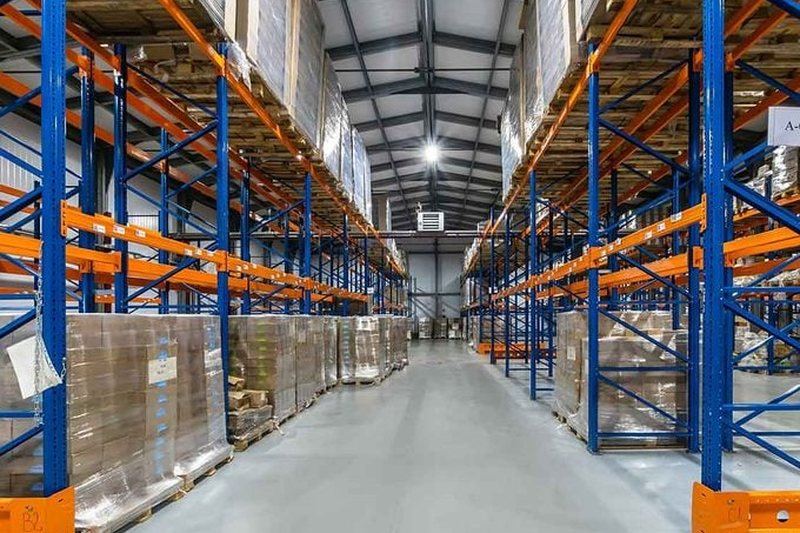
The duration of each step depends on the number of locations, the breadth of the product range, and the available data. No one decides the order of these steps: measure, calculate, design, assign, reconfigure, and track. No step is skipped; shortcuts are taken only where solid groundwork has already been laid—a warehouse layout without a known shipment structure is nothing more than a hastily drawn-up plan.
1. Survey Distances and Volumes

2. Calculate Network and Sites

3. Size Warehouse and Transport

4. Tender the Work or Staff It Yourself

5. Switch Over and Go Live

6. Re-Measure the Effect and Hand Over
What a Logistics Consultant Costs — and How a Budget Comes About
What is invoiced is a daily rate, not a project lump sum. Five quantities determine it: seniority and breadth of responsibility; type of goods and depth of regulation, where dangerous goods, pharmaceuticals and customs matters sit above the average; the share of on-site presence, because warehouse work can hardly be done remotely; the length of the mandate; and how scarce the wanted profile is in the market. For the logistics roles in the Supply Chain Management area of competence the openly stated ranges currently run from €550 to €1,300 per working day.
-
€900 – €1,300 per day
-
Freelance Contract Logistics Specialist
€850 – €1,250 per day
-

Freelance Export Control Specialist
€800 – €1,200 per day
-

€800 – €1,200 per day
-

Freelance Cold Chain Specialist
€800 – €1,150 per day
-

Freelance Transportation Manager
€750 – €1,050 per day
-

€750 – €1,050 per day
-

Freelance Freight Forwarding Consultant
€750 – €1,050 per day
-

Freelance Warehouse Management Specialist
€700 – €1,000 per day
-

€700 – €1,000 per day
-

Freelance Last-Mile Logistics Specialist
€700 – €1,000 per day
-

Freelance Warehouse Logistics Expert
€600 – €900 per day
-

Freelance Dangerous Goods Safety Advisor
€550 – €850 per day
The range for each role is stated on the role page, not on request.
How a budget comes about. The count is in person-days, not in a lump sum. A distance survey with a baseline measurement at one site usually sits at 10 to 20 person-days. A warehouse design from the access profile to the zone layout sits closer to 20 to 40 days, a network calculation across several sites at 25 to 50. A transport or contract logistics tender is counted over the rounds and runs three to six months depending on the bidder field. Responsibility for a period follows a different logic: three to five weekdays, booked over half a year to one and a half years.
The yardstick is not the daily rate but the cost volume being moved. A site with €6m in annual logistics cost already carries 30 consulting days at an effect of under two per cent. For a warehouse with half a million euros in annual cost an external mandate rarely pays — and we say that before the quote, not after the first month.
Why the arithmetic looks different here than at a consulting firm. What is paid for is the person who stands in the warehouse and calculates — there is no project management layer above it, no partner share and no base charge for methodology. Conversely there is no apparatus either: what you engage are individual specialists or a small pairing, and the professional lead sits in your own house. We do not offer success-based fees, because they set the incentive to show savings on paper instead of actually reaching them in operation.
Which role is the right one is decided by the assignment: a distance survey in a warehouse calls for different experience than a network calculation across several sites. All profiles of the area of competence are listed under Supply Chain Management — among them Freelance Logistics Manager, Freelance Logistics Planner, Freelance Transportation Manager and Freelance Contract Logistics Specialist. For adjacent tasks, Operations & Production, Purchasing & Procurement and Facility Management round out the picture.
Transport and Warehousing Are Getting More Expensive While Space Stays Scarce
+3.2%
78.9%
3.4%
Questions Asked Before a Logistics Project
Excellent. We are not the only ones who think so.
consultingheads has received several awards from leading trade magazines and independent third parties.